

Hiking the Indian Staircase Trail: An Off-Trail Adventure in Red River Gorge
This page contains affiliate links. Read the full disclaimer for more information.
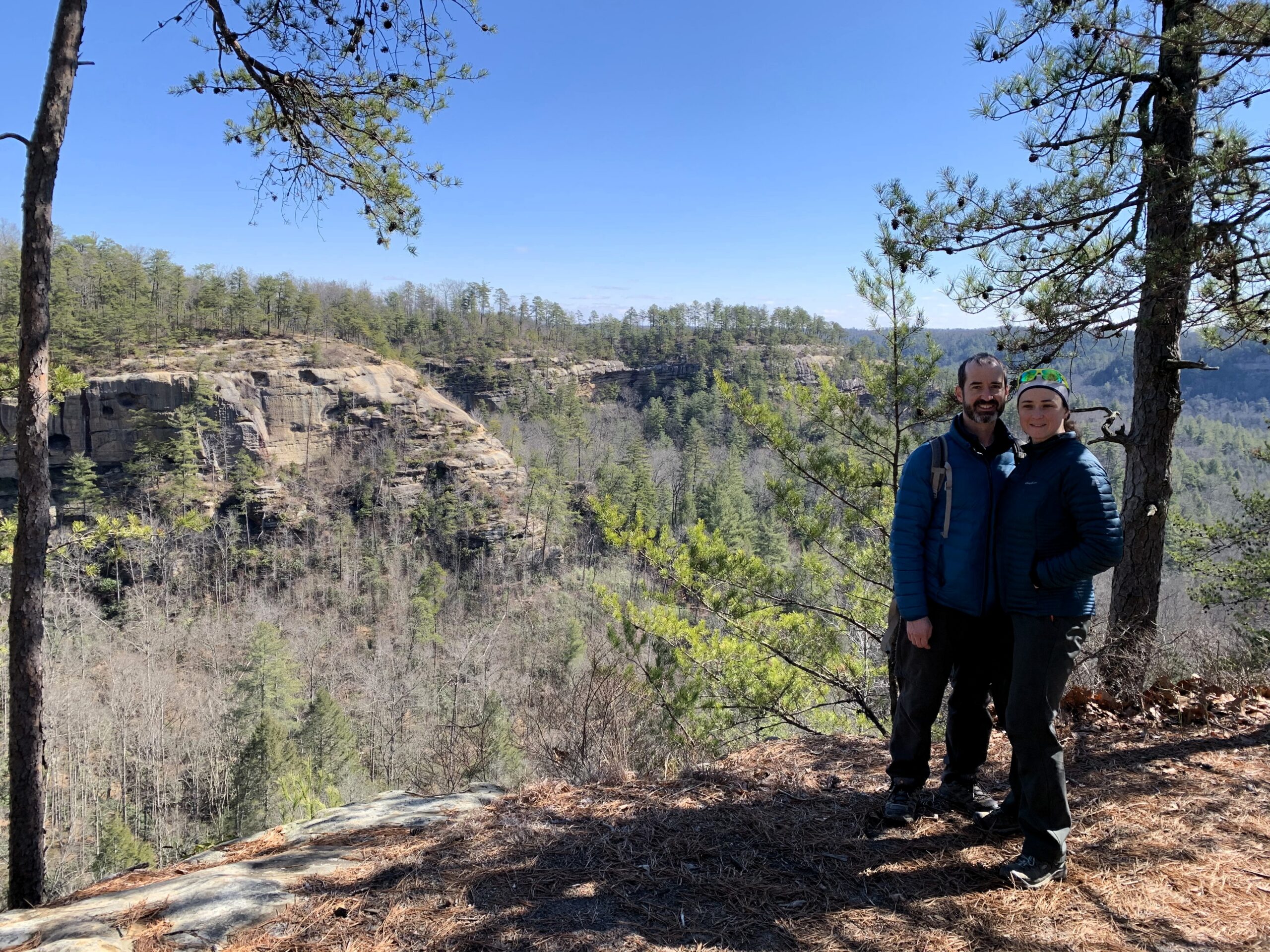
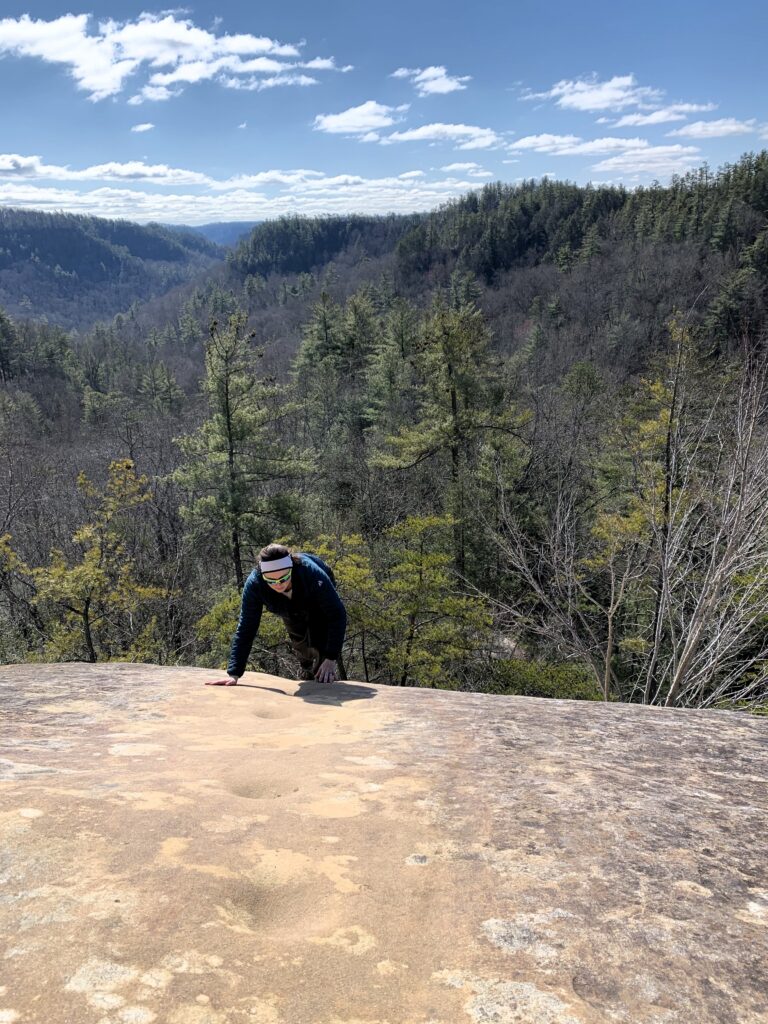
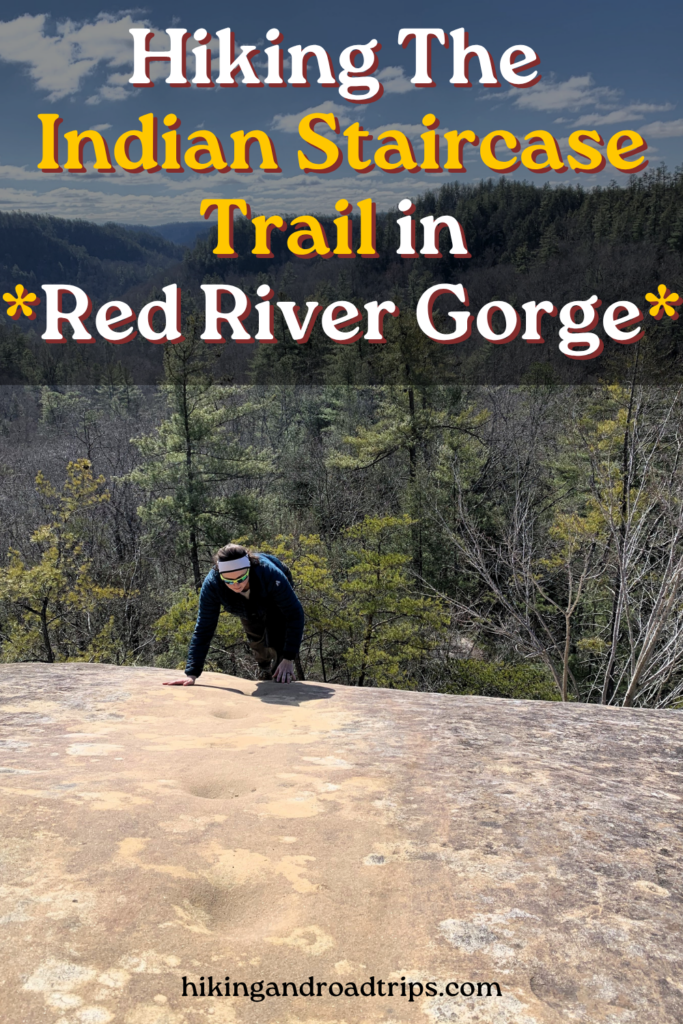
My fingers brushed the warm, orange sandstone as I reached for the next smoothed pocket. I paused. The steep angle obscured the top of the escarpment above. Below, the leafless forest of the Red River Gorge in the early spring spread across the valley. The trail of pockets showed how far I’d scrabbled up the smoothed rockface.
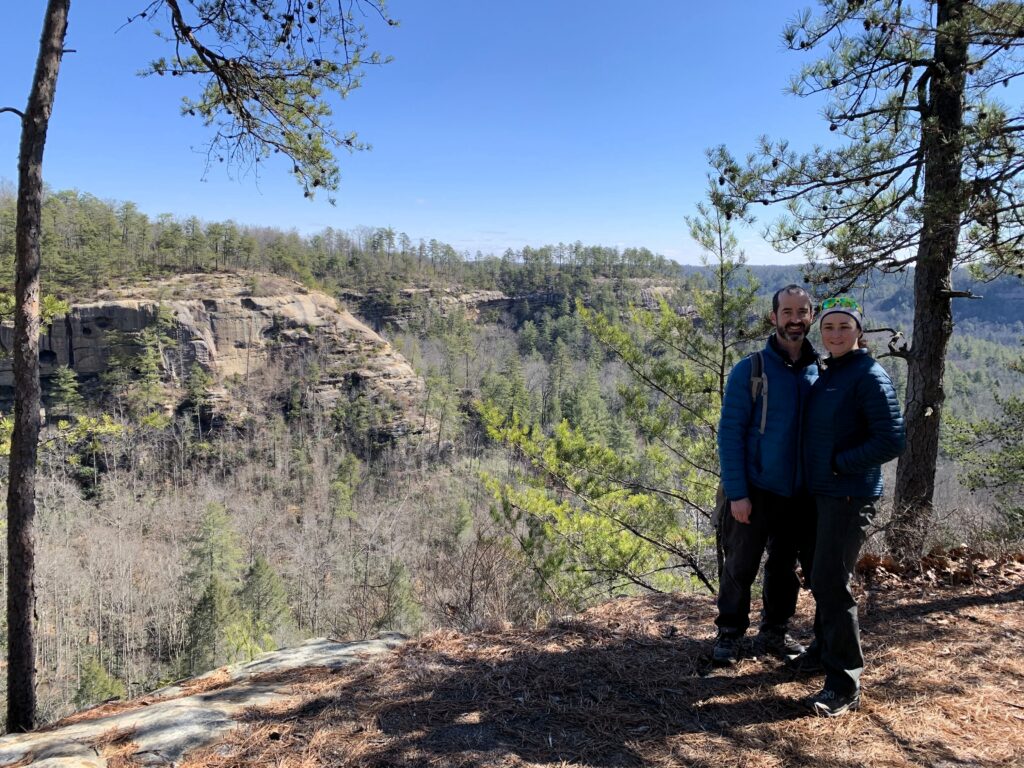
The Indian Staircase Trail is legendary among eastern Kentucky’s unofficial trails. For the four years we lived in the Bluegrass State, we’d stuck to labeled pathways or rock-climbing approach routes. This off-trail experience was our first in the Red River Gorge.
Under the beaming early spring sun, I felt the excitement of finally doing something that had been on the bucket list for years. Why did it take moving away for us to do something that was in our backyard the whole time?
Indian Staircase Trail at a Glance
- Location: Red River Gorge Geological Area, eastern Kentucky
- Trailhead: Bison Way Trail Parking Area
- Distance: 4-mile loop
- Time: About 2 1/2 hours, including stops
- Difficulty: Strenuous and includes an exposed sandstone scramble
- Trail type: Unmarked / off-trail (navigation required)
- Best time to go: A dry spring or fall day, when the rock isn’t wet or scorching
- Highlights: The Indian Staircase scramble, Council Chamber rock shelter, ridgeline views, and Indian Arch
Why the Indian Staircase Trail Belongs on Your Red River Gorge Bucket List
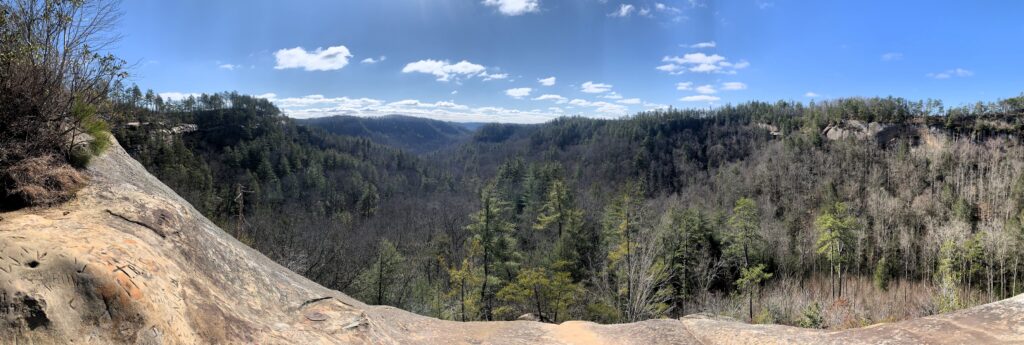
Kentucky’s Red River Gorge has no shortage of must-do trails and experiences. The 29,000-acre Geological area and adjacent 13,000-acre Clifty Wilderness are a treasure trove for explorers with over 100 natural arches, rock climbing walls, and rock shelters. A visit to Natural Bridge State Park appears on multiple bucket lists for visiting Kentucky.
But for the intrepid outdoorsperson, the real excitement is in hunting for one of the unmarked arches or making your own campsite with a plunging view of sandstone cliffs.
Features like Eagle’s Nest and Cloudsplitter are on the list of must-do adventure trails in the Red River Gorge. Reaching them tests your navigation and confidence when ranging off-trail. The Indian Staircase Trail is one of these essential adventures.
The adventure starts the moment you leave the maintained path. The route is unmarked once you’re off the Sheltowee Trace, so it’s easy to lose the way and end up backtracking to find it again. Then there’s the climb itself. Scrambling up hundreds of feet of gritty sandstone takes gumption. It’s not the kind of hike you do on a whim in sandals.
But for those who like a taste of adventure, the Indian Staircase Trail is an easy enough route to tackle. It took us about 2 1/2 hours on a four-mile loop, including stops to admire the view and to venture to the rock shelter.
The Legend Behind the Indian Staircase Trail
The staircase itself is a sloping sandstone abutment. The story we heard, and the one found in multiple places online, is that legendary explorer Daniel Boone carved the footholds present in the rock face today.
The chances of this being true are slim, but Kentucky loves this American pioneer. The national forest bears his name. His cabin and grave are two visitable historic sites.
Legend number two comes from the Red River Gorge’s pre-colonial history. The geological area’s unique environment has preserved artifacts from the indigenous cultures. The story claims the Adena people, who had a settlement at the nearby Council Chamber Rock Shelter, cut the foot and hand holds into the cliff.
A geologist will tell you the most likely answer is that these so-called foot and hand holds are just natural weathering pockets in the sandstone. Centuries of feet and hands have worn them smoother.
Whatever source story you believe, these little pockets are there waiting to help you scramble up the incline. At its steepest, the curve bends 45 degrees, before easing near the peak.
Climbing the Indian Staircase Trail
The Indian Staircase Trail makes a loop when you start from the Bison Way Trail Parking Area. We tackled the route to climb the staircase feature first, as do most hikers. This direction starts on Trail #210 to the Sheltowee Trace Trail, where you’ll turn left and start looking for an unmarked spur trail about 0.3 miles down.
The internet and trail guides will warn you that the Indian Staircase Trail is not for the faint of heart (and people have actually died here, so beginner hikers should wait until they’re more experienced). The approach requires scrambling through a water runoff to reach the staircase’s base. From there, two hundred feet of Corbin sandstone expose its golden color to the elements with no tree or bush to grab. There is a risk of sliding down the face. It’s the reason why we left our toddler with the grandparents instead of sticking him in a backpack.
Our hike in March happened on a day requiring puffy jackets. Sunshine and no rain left the exposed rock face bone dry. It’s one of the better times to tackle the hike, as the stone isn’t scorching hot yet like summertime, and steep, wet stone is unsafe even in the grippiest shoes.
I found the scramble easier than the hike reviews suggested. I probably wouldn’t have climbed if it were wet. Climbing steep, slick sandstone is how people get injured in the gorge.
Pro trip: Check AllTrails before you go for more information and tips on finding and climbing the trail.
Entering the Council Chamber
After successfully ascending the Indian Staircase, we hiked on to another famous off-trail destination: the Council Chamber rock shelter. These features formed across the gorge when softer rock eroded from the cliff sides, leaving behind a sandstone roof.
People have sheltered under rock overhangs, including this one, for over 12,000 years. Archaeologists found some of the earliest signs of plant domestication in eastern North America and rare textiles.
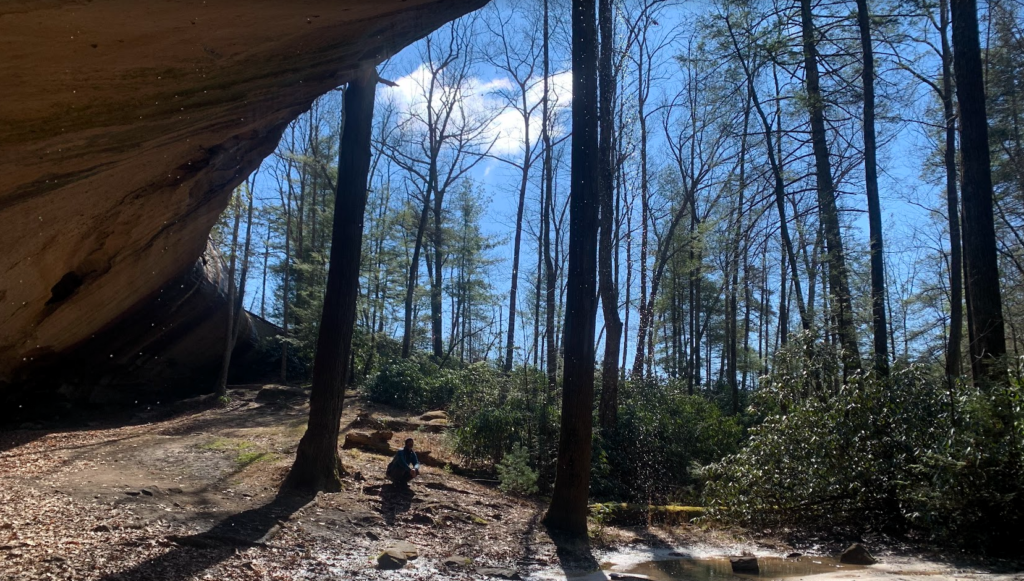
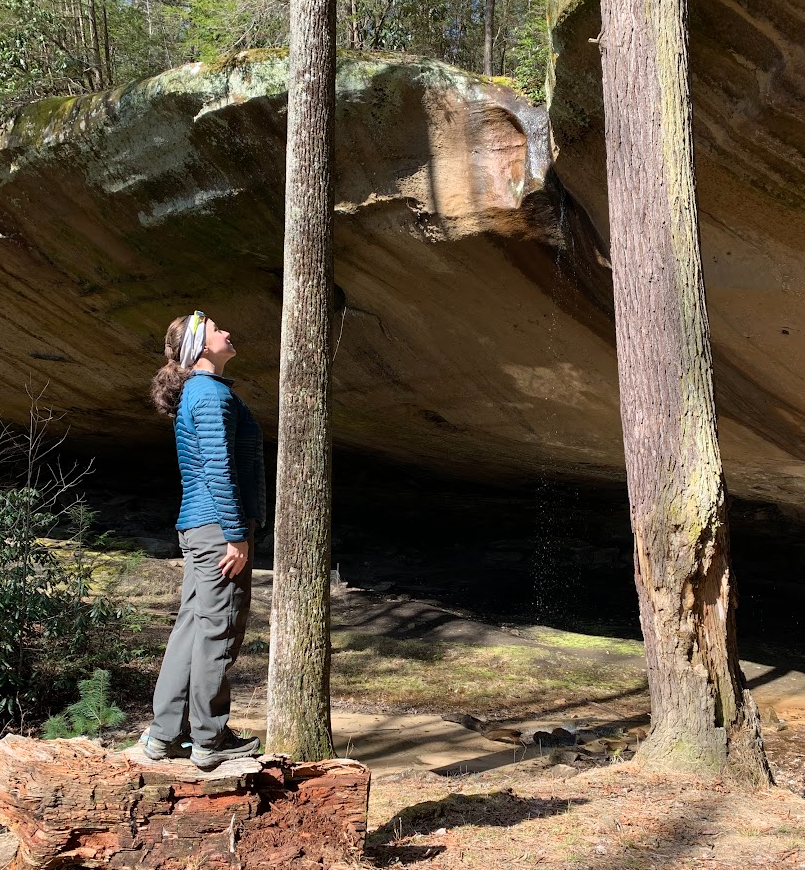
It took me four years to get to stand where the ancients did. From above, you’d never know you’re standing on the largest rock shelter in the Red River Gorge. The roofline arcs overhead to cover a space bigger than a football field.
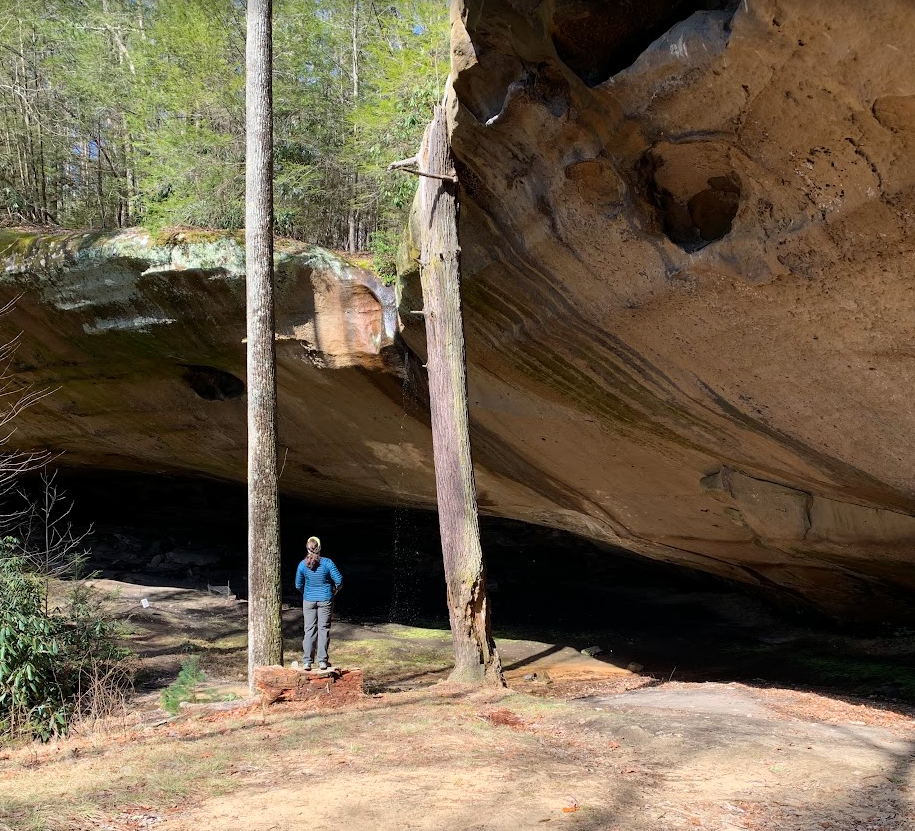
Standing under its ceiling, I wondered what it looked like thousands of years ago, when people tucked in beneath this natural awning. How did people stay warm in something that was so open to the air? What still lies preserved in its soil? Digging is limited, both to respect the ancient cultures and because these same rock shelters are home to the White-haired Goldenrod, an endangered plant that only grows here, in these eastern Kentucky shelters.
Closing the Loop
After exploring the rock shelter, we returned to the ridgeline but went the wrong way for a while as we tried to find the way out. That’s part of the adventure of doing an unmarked trail. The Red River Gorge has multiple places where people have trekked back and forth in search of arches or remote campsites.
The longer trek gave us more time to admire the ridgeline views, especially with the trees still barren and the skies clear. On our way out, we trekked on the marked Sheltowee Trace Trail, past the Indian Arch, down Bison Way, and back to the Gladie Visitor Center.
This hike on the Indian Staircase Trail was my last trip in the area to date, but I wish it wasn’t. Don’t wait to move away before appreciating the trails near you.
Browse more hiking trails to add to your next adventure:
- 9 Best Hiking Trails Along Mount Baker Scenic Byway
- Hiking in Missouri: 5 Supreme Spots for The Perfect Missouri Day Hike
- Why Sky Pond Trail in Rocky Mountain National Park is One of the Best Hikes In Colorado
Pin it for later!
Casey McKenna-Monroe is an outdoors and family travel writer based in Clover, South Carolina, who covers hikes and off-the-beaten-path adventures across the American South. You can read more from them on their website, mcmotravels.com.